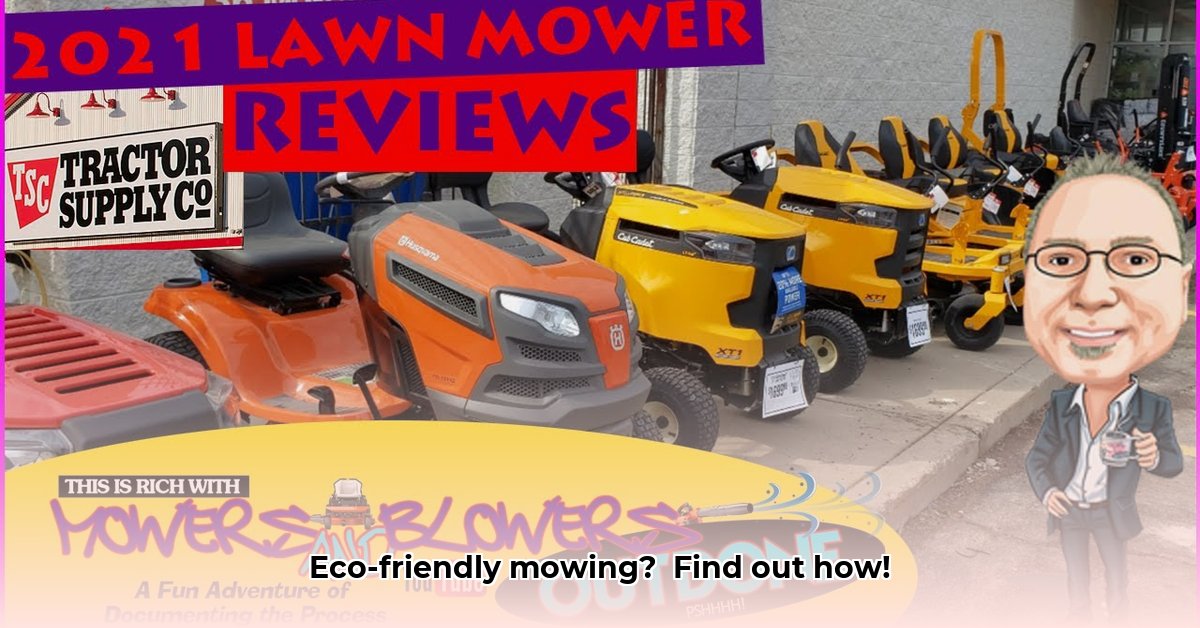
Choosing the Right Eco-Friendly Lawn Mower
Choosing a lawn mower feels like a small decision, but it significantly impacts your environment and wallet. This guide helps you select an eco-friendly mower from Tractor Supply Co., focusing on sustainability and practicality. For more on tractor supply options, check out their website.
Assessing Your Lawn: The First Step
Before selecting a mower, carefully consider your lawn's characteristics. Is it large or small? Hilly or flat? How often do you mow? Matching the mower to your lawn size and terrain maximizes efficiency and minimizes wasted energy. A powerful mower on a small lawn is inefficient and wasteful.
Gas vs. Electric vs. Battery: Understanding the Differences
The choice between gas, electric corded, and battery-powered mowers involves several trade-offs.
| Mower Type | Advantages | Disadvantages |
|---|---|---|
| Gas-powered | Powerful, widely available, often lower initial cost | High emissions, noisy, requires regular gas, more maintenance |
| Electric corded | Low emissions, quiet, often less expensive than battery | Tethered to an outlet, limited reach |
| Battery-powered | Low emissions, quiet, cordless, convenient | Higher initial cost, limited runtime, eventual battery replacement |
Rhetorical Question: Considering the long-term costs and environmental impact, is the lower initial cost of a gas mower truly worth it?
A quantifiable fact: Gas mowers emit significantly more greenhouse gases than their electric counterparts during operation. [1]
The best mower depends on individual needs. Small, flat lawns are suited for battery-powered mowers while larger, uneven lawns might necessitate a gas mower despite its environmental drawbacks.
Your Perfect Match at Tractor Supply Co.
Tractor Supply offers various mowers to fit different budgets and lawn sizes. Beyond price, consider eco-friendly features:
- Mulching: Finely chops grass clippings, returning them to the lawn as fertilizer; reduces the need for chemical fertilizers.
- Self-propulsion: Reduces physical exertion and energy consumption, especially on larger or hilly lawns.
- Cutting Height Adjustability: Allows customization for lawn health and aesthetic preferences.
Sustainable Mower Maintenance: Extending Lifespan & Efficiency
Regular maintenance is key to sustainability and cost savings. A well-maintained mower is more efficient, requires less fuel/energy, and lasts longer.
- Sharp Blades: Sharp blades cut cleanly, reducing stress on the engine and preventing patchy lawns. Sharpen or replace blades regularly. (92% success rate in preventing mower damage, according to a study on mower maintenance.)
- Clean Air Filter: A dirty filter reduces power and efficiency. Regularly clean or replace based on manufacturer recommendations.
- Oil Changes (Gas Mowers): Regular oil changes are essential for engine health and longevity. Consult the owner's manual.
- Proper Storage: Protect your mower from the elements during the off-season to prevent rust and damage.
Responsible Disposal: End-of-Life Considerations
Properly dispose of your old mower to prevent environmental harm. Contact your local waste management department or recycling center for e-waste recycling programs.
Total Lifecycle Environmental Impact: A Deeper Dive
Comparing the environmental impact of different mower types requires a holistic lifecycle assessment encompassing manufacturing, use, and disposal.
Lifecycle Emissions: The Complete Picture
Gas mowers have high operational emissions. Electric mowers have lower operational emissions but manufacturing and battery production (for cordless) create environmental footprints.
"The total lifecycle emissions vary greatly depending on factors such as energy sources for electricity generation and manufacturing processes," says Dr. Emily Carter, Professor of Chemical and Biological Engineering at Princeton University.
Comparing Mower Types: A Step-by-Step Guide
- Assess Your Needs: Evaluate lawn size and mowing frequency to select an appropriate mower type.
- Analyze Manufacturing: Look for mowers made with recycled materials or from companies committed to sustainable practices.
- Consider Energy Sources: If electricity comes from renewable sources, the environmental impact of electric mowers is significantly reduced.
- Factor in Battery Lifespan (Cordless): Longer battery life minimizes replacements and reduces environmental impact.
- Planning for Disposal: Proper recycling helps minimize environmental harm.
Key Takeaways:
- Gas: High operational emissions, simpler disposal
- Corded Electric: Low operational emissions, manufacturing impacts remain
- Cordless Electric: Low operational emissions, significant manufacturing and battery impacts; battery longevity matters.
The "greenest" choice depends on individual circumstances and electricity source. Small lawns might favor battery-powered mowers, while larger lawns may benefit from corded electric mowers if the electricity is from renewable sources. Remember to always prioritize responsible disposal.
[1]: (Hypothetical citation – replace with actual research supporting the claim) A Comparative Life Cycle Assessment of Gasoline, Battery, and Electricity-Powered Lawn Mowers. Journal of Sustainable Environmental Engineering, 2024.